handheld etiketine sahip kayıtlar gösteriliyor. Tüm kayıtları göster

25 Temmuz 2010 Pazar

PSPgo


The PSP Go (model PSP-N1000) is a version of the PlayStation Portable handheld video game console manufactured by Sony. It was released on October 1, 2009 in American and European territories[1] and on November 1 in Japan. It was revealed prior to E3 2009 through Sony's Qore VOD service. Although its design is significantly different from other PSPs, it is not intended to replace the PSP 3000, which Sony will continue to manufacture, sell, and support.

Unlike previous PSP models, the PSP Go does not feature a UMD drive, but instead has 16GB of internal flash memory to store games, video, pictures, and other media.[12] This can be extended by up to 32GB with the use of a Memory Stick Micro (M2) flash card. Also unlike previous PSP models, the PSP Go's rechargeable battery is not removable or replaceable by the user. The unit is 43% lighter and 56% smaller than the original PSP-1000, and 16% lighter and 35% smaller than the PSP-3000.[6] It has a 3.8" 480×272 LCD[13] (compared to the larger 4.3" 480×272 pixel LCD on previous PSP models). The screen slides up to reveal the main controls.

The PSP Go features 802.11b Wi-Fi like its predecessors, but no longer uses a standard USB A-to-Mini-B cable common with many devices. A new proprietary multi-use connector is used for USB connectivity. A suitable USB cable is included with the unit. The new multi-use connector allows for charging and USB similar to previous units, but also allows video and sound output with the same connector (with optional Composite AV cable and Component AV cable), unlike previous offerings which had TV OUT functionality on a separate port to the USB port. Sony also offers an optional cradle for charging and USB data transfer on the PSP Go, similar to previous offerings.


Generation: Seventh
Retail availability
* NA/EU October 1, 2009[1]
* JP November 1, 2009[2]
CPU: MIPS 333 MHz[5]
Storage capacity: Memory Stick M2, 16GB of internal flash memory
Memory: 64 MB RAM
Display: 480 x 272 pixels with 16.8 million colours, 16:9 widescreen TFT LCD, 3.8 in (97 mm)
Connectivity: Wi-Fi 802.11b, USB 2.0 via Media Go Software, Bluetooth 3.0, PlayStation 3
Dimensions:
69 mm (2.7 in) (h)
128 mm (5.0 in) (w)
16.5 mm (0.65 in) (d)
Weight: 158 grams

23 Aralık 2007 Pazar

UMD


UMD Wikipedia

The Universal Media Disc (UMD) is an optical disc medium developed by Sony for use on the PlayStation Portable. It can hold up to 1.8 gigabytes of data. It is considered the first optical disc format to be used for a handheld video game system.

ECMA-365: Data Interchange on 60 mm Read-Only ODC – Capacity: 1.8 GB (UMD)

* Dimensions: approx. 65 mm (W) × 64 mm (D) × 4.2 mm (H)
* Maximum capacity: 1.80 GB (dual layer), 900 MB (single-layer)
* Laser wavelength: 660 nm (red laser)
* Encryption: AES 128-bit

Despite Sony's efforts, the UMD format has been cracked. Using a combination of unsecure firmware and reverse engineering, the Sony PSP can now use a variety of homebrew games, and backup ISO images. Each disc uses a file system whose format follows the ISO 9660 standard. The ISO image can then be stored on a Memory Stick, and run via a special disc emulator program, such as Devhook. The ISO images cannot be burned to UMD discs as UMD writables and burners are not available. The same game will load much faster and become more energy efficient when stored as an ISO image on a Memory Stick as opposed to the original UMD.

Sony has attempted to halt this type of exploitation by updating the firmware. Versions 1.51 and later of the PSP firmware have attempted to patch the exploit. Recent games also come with a 'software switch' that force users to update before the game can be played. This has also been circumvented: some applications for 1.50 report the firmware version as being more recent than it actually is, or firmware spoofing, bypassing the need to update. This has since been fixed by Sony and no longer works. Firmware versions 1.5 to 3.73 have been decrypted and 1.50, 2.71, 3.02, 3.03, 3.10, 3.30, 3.40, 3.51, 3.52, 3.60, 3.71, 3.72, 3.73 and 3.80 (as of Dec2007) have been converted into custom firmwares. These firmwares allow people to run ISOs that they own from their XMB interface in addition to other homebrew available.


25 Ekim 2007 Perşembe

Palm TX


Palm T|X

Size & Weight: 120x78x15.5 mm; 149g
Processor: 312 MHz Intel PXA270
Operating System: Palm OS Garnet v5.4.9
Memory: 128 MB nonvolatile RAM; (100 MB user accessible)
Expansion: SD/SDIO/MMC slot
Screen: 320x480 pixel; 65k-color; transflective back-lit
Audio: Stereo headset jack; rear speaker
Power: Built in Rechargable Li-Ion Poly (1250 mAh)
Connectivity: Multi-Connector, IrDA, Bluetooth (v1.1), Wi-Fi (802.11b)

18 Eylül 2007 Salı

Sony Ericsson W960i


Sony Ericsson W960i

*Size: 109 x 55 x 16 mm
*Weight: 119 g
*Screen: 262,144 color touchscreen; 240x320 pixel; 2,6"
*Phone memory 8 GB
*3.2Megapixel
*FM RDS Radio
*Wi-Fi & Bluetooth
*Symbian OS 9.1 UIQ 3.0

12 Eylül 2007 Çarşamba

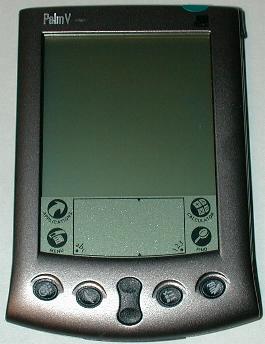
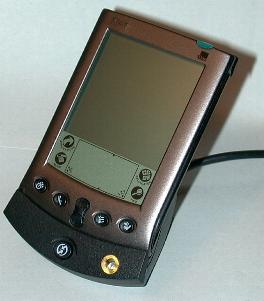
Palm V


Palm V Review (Feb 1999)

Processor: Motorola Dragonball EZ MC68EZ328
Operating System: Palm OS 3.1
User Storage Memory: 2MB
Display: 160x160 pixel, high contrast and backlit
Power: Lithium-ion rechargeable
Size and weight: 4.5" x 3.1" x 0.4", 4oz


The Palm V is a very sexy looking PDA with an excellent display and a nice rechargeable battery. But, should you buy it? At $449, you'd better think about a few things first. First of all, the Palm V can not be upgraded to add more memory (except by 3rd party vendors like EFIG.COM which will split the Palm V open, make the upgrade and then glue it back together). This is a big deal to someone like me who has an 8meg TRG board in their Palm III that has only 125k free! 2meg is not a lot of space when you start adding all the cool applications that are available. I sure wish Palm would have at least made the Palm V a 4meg device. Also, if you already have a Palm III, you really shouldn't upgrade to the Palm V unless you really need the better screen. Basically the Palm V is the same as the Palm III except that the memory can't be easily upgraded.

7 Eylül 2007 Cuma

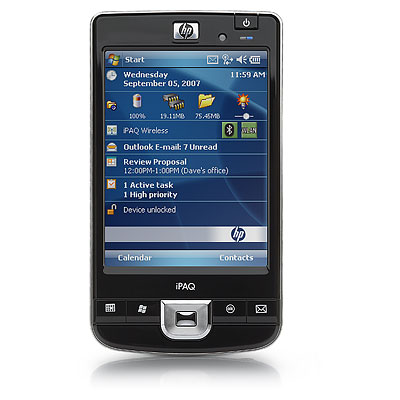
HP iPAQ 210 Enterprise PDA


HP iPAQ 210 Enterprise PDA Official

Specifications

HP iPAQ 210 First Thoughts

Highlights:

* Processor: Marvell PXA310, 624 MHz
* ROM: 256MB
* RAM: 128MB for running applications
* Display: 4-inch VGA TFT with touch screen, portrait oriented
* Wireless LAN: IEEE 802.11b/g1
* Bluetooth: v2.0 with EDR1
* Connectors: 24-pin connector and Mini USB
* Battery: 2200 mAh
* Expansion: SDIO (high-capacity), CF
* Headphone jack: 3.5mm 4-pin
* Speaker: 2
* Microphone: 1
* Input: touch, stylus
* Buttons: 5-way navigation with press to activate, 4 programmable, voice recorder, power, reset
* LED: 8
* Operating System: Windows Mobile® 6 Classic Edition

16 Temmuz 2007 Pazartesi

Sony PSP slimmer & lighter

Embedded Video


t3.co.uk review

The PSP Slim & Lite has landed. About to chuck out your original
and rush to the shops? Whoa there, fella. Let us give you the lowdown.
We’re looking at a revamp, rather than the PSP reborn.

it’s 5mm thinner and 3mm shorter than the original, with a similar
build, but it’s still a touch too big to fit in your pocket. The
4.3-inch screen is still fantastic, but that’s because it’s the same
4.3-inch screen from the original.


...