12 Temmuz 2007 Perşembe

SR-71 Blackbird


SR-71 Blackbird - Wikipedia

The Lockheed SR-71 was an advanced, long-range, Mach 3 strategic reconnaissance aircraft developed from the Lockheed YF-12A and A-12 aircraft by the Lockheed Skunk Works. The SR-71 was unofficially named the Blackbird; its crews often called it the Sled, or the Habu ("snake"). The SR-71 line was in service from 1964 to 1998. Clarence "Kelly" Johnson was the man behind many of the design's advanced concepts. The SR-71 was one of the first aircraft to be shaped to reduce radar cross section. However, the aircraft was not stealthy and still had a large enough radar signature to be tracked by contemporary systems. The aircraft's defense was its high speed and operating altitude; if a surface-to-air missile launch was detected, the standard evasive action was to simply accelerate. Thirteen aircraft are known to have been destroyed, all for non-combat related reasons.

The SR-71 remained the world's fastest and highest-flying operational manned aircraft throughout its career. From an altitude of 80,000 ft (24 km) it could survey 100,000 square miles per hour (72 square kilometers per second) of the Earth's surface. On 28 July 1976, an SR-71 broke the world record for its class: an absolute speed record of 2,193.1669 mph (3,529.56 km/h), and a US "absolute altitude record" of 85,068.997 feet (25,929 m).

NASA Dryden SR-71 Blackbird

sr-71.org

SR-71s in USA

LOST and lostpedia.com


Lost - Lostpedia

"This show is about people who are metaphorically lost in their lives, who get on an airplane, and crash on an island, and become physically lost on the planet Earth. And once they are able to metaphorically find themselves in their lives again, they will be able to physically find themselves in the world again. When you look at the entire show, that's what it will look like. That's what it's always been about." - Lost co-creator Damon Lindelof, IGN interview, January 16, 2007

LOST - IMDB

Large Hadron Collider


Large Hadron Collider - Wikipedia

The Large Hadron Collider (LHC) is a particle accelerator and collider located at CERN, near Geneva, Switzerland (46°14′N, 6°03′E). Currently under construction, the LHC is scheduled to begin operation in May 2008.[1] The LHC is expected to become the world's largest and highest energy particle accelerator. The LHC is being funded and built in collaboration with over two thousand physicists from thirty-four countries, universities and laboratories.

When switched on, it is hoped that the collider will produce the elusive Higgs boson particle — often dubbed the God Particle — the observation of which could confirm the predictions and 'missing links' in the Standard Model of physics, and explain how other elementary particles acquire properties such as mass.

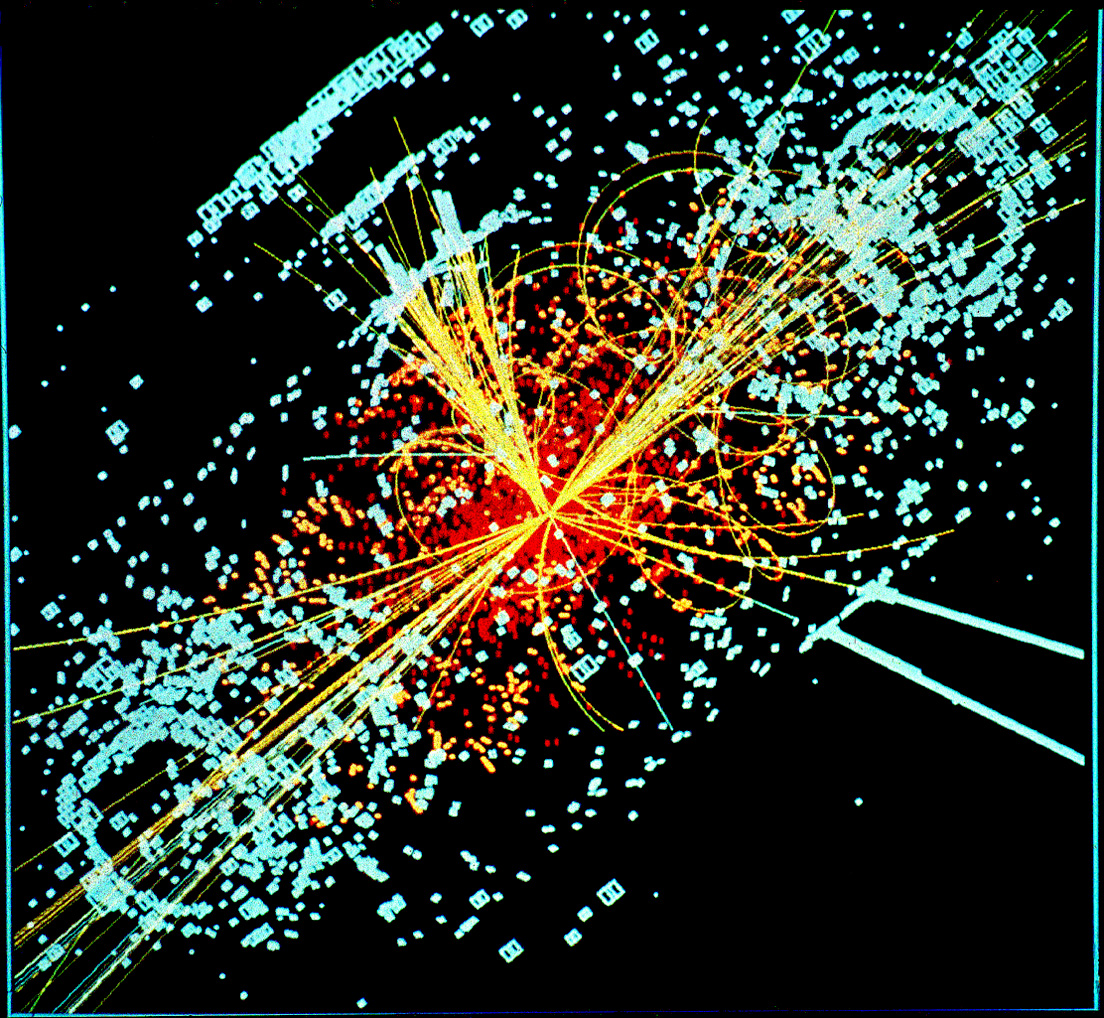
CMS Higgs Event

Richard Stallman - The Man Behind The Curtain

Richard Stallman at DTU in Denmark 2007

Richard Stallman - Wikipedia

Richard Matthew Stallman (often abbreviated as RMS) (born March 16, 1953) is a software freedom activist, hacker, and software developer. In September 1983, he launched the GNU Project to create a free Unix-like operating system, and has been the project's lead architect and organizer. With the launch of the GNU project he started the free software movement, and in October 1985 set up the Free Software Foundation. He co-founded the League for Programming Freedom. Stallman pioneered the concept of copyleft and is the main author of several copyleft licenses including the GNU General Public License, the most widely used free software license.[4] Since the mid-1990s, Stallman has spent most of his time advocating for free software, as well as campaigning against both software patents and what he sees as excessive extension of copyright laws. Stallman has also developed a number of pieces of widely used software, including the original Emacs, the GNU Compiler Collection, and the GNU Debugger.

Unix Family Tree

Unix Family Tree

RSA Signature Forgery Vulnerability

GNUTLS PKCS RSA Signature Forgery Vulnerability


GnuTLS is prone to a vulnerability that may allow an attacker to forge an RSA signature. The attacker may be able to forge a PKCS #1 v1.5 signature when verifying a X.509 certificate.

An attacker may exploit this issue to sign digital certificates or RSA keys and take advantage of trust relationships that depend on these credentials, possibly posing as a trusted party and signing a certificate or key.

This vulnerability is a variant of the issue discussed in BID 19849 (OpenSSL PKCS Padding RSA Signature Forgery Vulnerability) and affects GnuTLS versions prior to version 1.4.3.

ITU #239 - TOP500 List 06-2007


Istanbul Technical University (ITU) | TOP500 Supercomputing Sites


27 Haziran'da, Almanya'nın Dresden kentinde yapılan Uluslararası Süperbilgisayar Konferansı'nda açıklanan listede (http://www.top500.org/list/2007/06/300), bu yılın ilk aylarında güncellenen UYHBM'nin sistemi, 6067 GFlops'luk bir hızla 239. sıraya yerleşti.